German Yeast Cake with Fruit Streuselkuchen Recipe
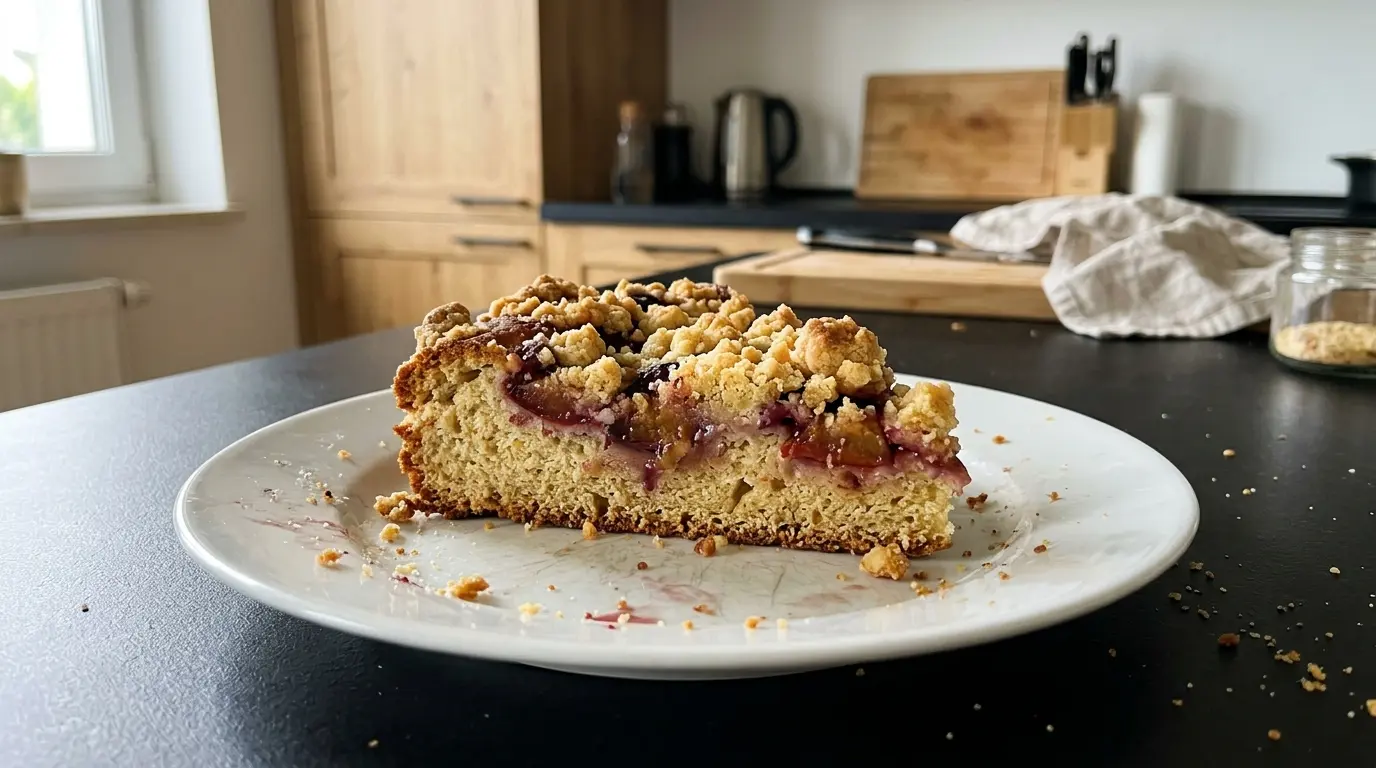
Streuselkuchen is a fluffy yeast cake with fruit, covered with a thick layer of buttery crumble. In Germany it is often baked for family coffee gatherings, the classic “Kaffee und Kuchen”, especially at weekends. It resembles Polish yeast cake with crumble, but is usually thinner and generously loaded with seasonal fruit.
This Streuselkuchen combines a light, airy yeast base with juicy fruit and a thick, crunchy crumble, giving you three textures in every bite. It’s ideal for feeding a crowd and showcases seasonal fruit in a very classic German way.
Chef's tips
Make sure the milk is only lukewarm so you don’t kill the yeast. Chilling the crumble before baking helps it keep nice, chunky pieces instead of melting into a flat layer. If your kitchen is cool, allow a bit more time for the dough to rise.
How to serve
Serve slightly warm so the crumble is crisp and the fruit is soft and fragrant. It’s perfect for weekend coffee time, picnics, or as a simple dessert after a light meal.
Ingredients
- wheat flour for the dough - 400 g
- milk lukewarm - 200 ml
- fresh yeast - 25 g
- sugar for the dough - 80 g
- butter melted, cooled, for the dough - 60 g
- egg - 1 piece
- egg yolk - 1 piece
- salt - 0.5 teaspoons
- seasonal fruit e.g. plums, apples, berries, apricots, chopped - 500 g
- wheat flour for the crumble - 150 g
- sugar for the crumble - 80 g
- butter cold, for the crumble - 90 g
- vanillin sugar for the crumble, optional - 1 teaspoon
Preparation
- Gently warm the milk so it is lukewarm but not hot. Crumble the yeast into a small bowl, add 1 tablespoon of sugar, 2 tablespoons of flour and a few tablespoons of lukewarm milk. Mix and set aside for 10–15 minutes until the starter begins to rise and foam.
- Put the remaining flour, sugar and salt into a large bowl. Add the egg, egg yolk, yeast starter and the rest of the milk. Start kneading the dough by hand or with a mixer fitted with a dough hook.
- When the ingredients come together, pour in the melted, cooled butter and knead for another 8–10 minutes, until the dough is smooth, elastic and starts to come away from the sides of the bowl.
- Cover the bowl with a cloth and leave in a warm place for 45–60 minutes, until the dough doubles in volume.
- Meanwhile, prepare the crumble: put the flour, sugar and vanillin sugar into a bowl, add the cold butter cut into cubes. Rub with your fingers until clumps of various sizes form. Place the crumble in the fridge.
- Wash, dry and cut the fruit into pieces (plums into halves or quarters, apples into slices, larger fruit into cubes).
- Line a baking tin of about 25×35 cm with baking paper. Briefly knead the risen dough, stretch or roll it out to the size of the tin and transfer it to the form, smoothing the surface.
- Distribute the fruit evenly over the dough, pressing it lightly into the dough.
- Sprinkle everything with the chilled crumble, trying to cover most of the surface.
- Leave the cake for 15–20 minutes for a second rise. In the meantime, preheat the oven to 180°C (top and bottom heat).
- Bake the cake for 25–30 minutes, until the crumble is golden and the dough has risen and feels springy when lightly pressed with a finger.
- Remove from the oven, let cool slightly and cut into pieces. You can dust with icing sugar before serving.
Storage
Leftover cake keeps well for 1–2 days at room temperature, covered, or up to several weeks in the freezer. Refresh slightly stale pieces by briefly reheating them in a warm oven.