Horiatiko psomi – rustic Greek bread with olive oil Recipe
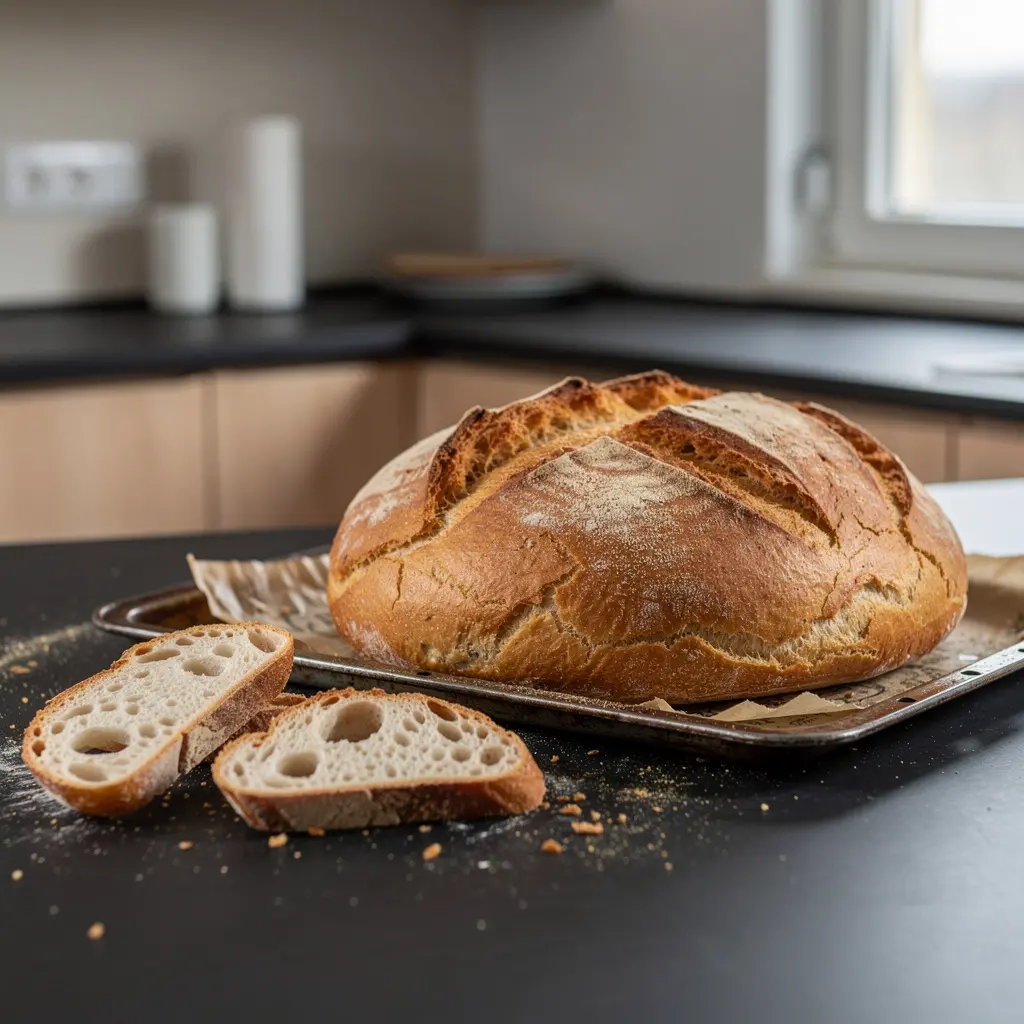
Horiatiko psomi is a simple country-style bread that appears on the table in Greek homes with practically every meal. It has a crisp crust, a soft crumb, and a delicate aroma of olive oil. It’s perfect for dipping in olive oil, mopping up sauce from the plate, or as a base for Mediterranean-style sandwiches.
Horiatiko psomi to kwintesencja greckiego stołu – prosty, wiejski chleb, który łączy chrupiącą, dobrze wypieczoną skórkę z miękkim, elastycznym środkiem o wyczuwalnym aromacie oliwy. Dzięki dodatkowi oliwy z oliwek bochenek dłużej pozostaje świeży i ma subtelnie śródziemnomorski charakter, który świetnie podkreśla smak serów, oliwek i gęstych sosów pomidorowych.
Chef's tips
Pilnuj temperatury wody do drożdży – powinna być przyjemnie ciepła, ale nie gorąca, inaczej chleb słabo wyrośnie. Podczas wyrabiania ciasta nie dosypuj zbyt dużo mąki: lepiej, żeby było lekko klejące niż zbyt twarde, bo wtedy bochenek wyjdzie zbity. Po upieczeniu koniecznie odczekaj, aż chleb całkowicie wystygnie – krojenie gorącego to najprostsza droga do wilgotnego środka przypominającego zakalec.
How to serve
Podaj ten chleb na ciepło z miseczką dobrej oliwy, odrobiną soli morskiej i oregano – dokładnie tak, jak w małych tawernach na wyspach. Świetnie pasuje do sałatki greckiej, pieczonych warzyw i dań z grilla, a do picia wybierz lekkie białe wino lub domową lemoniadę. To też idealny bochenek na weekendowe śniadanie: z fetą, pomidorem i oliwkami zamiast klasycznej kanapki.
Ingredients
- wheat flour type 550 or bread flour - 500 g
- water lukewarm, not hot - 320 ml
- instant yeast or 20 g fresh yeast - 7 g
- salt - 1.5 teaspoons
- sugar for activating the yeast - 1 teaspoon
- olive oil for the dough and for brushing - 3 tablespoons
- wheat flour for dusting the work surface - 2 tablespoons
Preparation
- Pour the lukewarm water into a bowl (it should feel like a pleasant warm bath, not hot), add the sugar and yeast. Stir and set aside for 10 minutes, until foam appears on the surface.
- Put the flour and salt into a large bowl and mix. Pour in the foamy yeast mixture and 2 tablespoons of olive oil. Stir with a spoon until the ingredients come together, then knead by hand for 8–10 minutes, until the dough is smooth, elastic, and slightly springy. If it sticks a lot, dust lightly with flour, but not too much.
- Lightly grease a bowl with olive oil, place the dough in it, and turn it so it’s coated with a thin layer of oil all over. Cover with a kitchen towel and leave in a warm place for about 1 hour, until doubled in size.
- After rising, transfer the dough to a lightly floured work surface. Gently flatten it with your hand, fold the edges toward the center like an envelope, turn it seam-side down, and shape into a round or oval loaf.
- Place the loaf on a baking tray lined with baking paper. Cover with a kitchen towel and leave for another 30–40 minutes, until it has clearly risen again.
- Preheat the oven to 220°C (top and bottom heat). Just before putting the bread in the oven, score it 2–3 times on top with a sharp knife or razor blade to a depth of about 1 cm and brush the top with 1 tablespoon of olive oil.
- Put the bread in the oven; you can place a small ovenproof dish with hot water on the bottom of the oven so the crust becomes extra crisp. Bake for 30–35 minutes, until the crust is well browned and you hear a hollow sound when you tap the bottom of the loaf.
- Transfer the baked bread to a wire rack and let it cool completely before slicing; otherwise, the inside may seem moist and underbaked.
- tips": { "storage": "Do not store the bread in the fridge, as it will go stale faster – it’s better to freeze part of the loaf and take it out as needed.", "serving": "Serve with olive oil and a pinch of salt, as a side to soups, salads, and grilled dishes. It also works great as a base for toasts with tomato, feta, and olives.", "variations": [ "You can add 1 tablespoon of dried oregano or thyme to the dough to give the bread a herbal aroma.", "Replace 100 g of wheat flour with wholemeal flour to make the loaf more filling.", "Before baking, sprinkle the top of the bread with sesame seeds or nigella seeds for extra crunch." ] }, "leftovers": { "notes": "Store the cooled bread wrapped in a clean kitchen towel or in a paper bag at room temperature and eat within 1–2 days. For longer storage, slice and freeze it, then toast or reheat the slices directly from frozen." }, "tags": [ "bread", "baking", "breakfast", "dinner", "Greek bread", "yeast baking" ], "whySpecial": "This rustic Greek bread combines a simple ingredient list with the distinctive aroma of olive oil, giving you a loaf that’s both everyday and a little bit special. It’s versatile, pairs with almost any Mediterranean dish, and its crisp crust with soft crumb makes it ideal for dipping and sandwiches.", "authorTips": "Use good-quality olive oil – its flavor will be noticeable in the finished bread. If your kitchen is cool, let the dough rise in the oven with just the light on or near a warm (but not hot) spot. Don’t rush the cooling time: cutting the bread while still hot can make the crumb gummy.", "servingSuggestions": "Serve slightly warmed, cut into thick slices, with a small bowl of olive oil and flaky salt for dipping. It’s perfect alongside Greek salad, grilled vegetables, souvlaki, or as a base for bruschetta-style toppings with tomatoes, herbs, and feta.", "personalNote": "This bread brings a bit of a Greek taverna atmosphere into the home kitchen. It’s straightforward to make, even if you’re new to yeast baking, and quickly becomes a staple for everyday meals and gatherings.", "seoKeywords": [ "horiatiko psomi", "rustic Greek bread", "Greek bread with olive oil", "homemade Greek bread", "easy bread recipe", "olive oil bread", "country-style bread", "Mediterranean bread" ] } ] }```}```
Storage
Chleb najlepiej przechowywać zawinięty w ściereczkę kuchenną lub papier, w temperaturze pokojowej, z dala od wilgoci. Można go pokroić na kromki i zamrozić, a potem odgrzewać w tosterze lub piekarniku bez rozmrażania.