German Beef Roast with Pan Gravy (Rinderbraten) Recipe
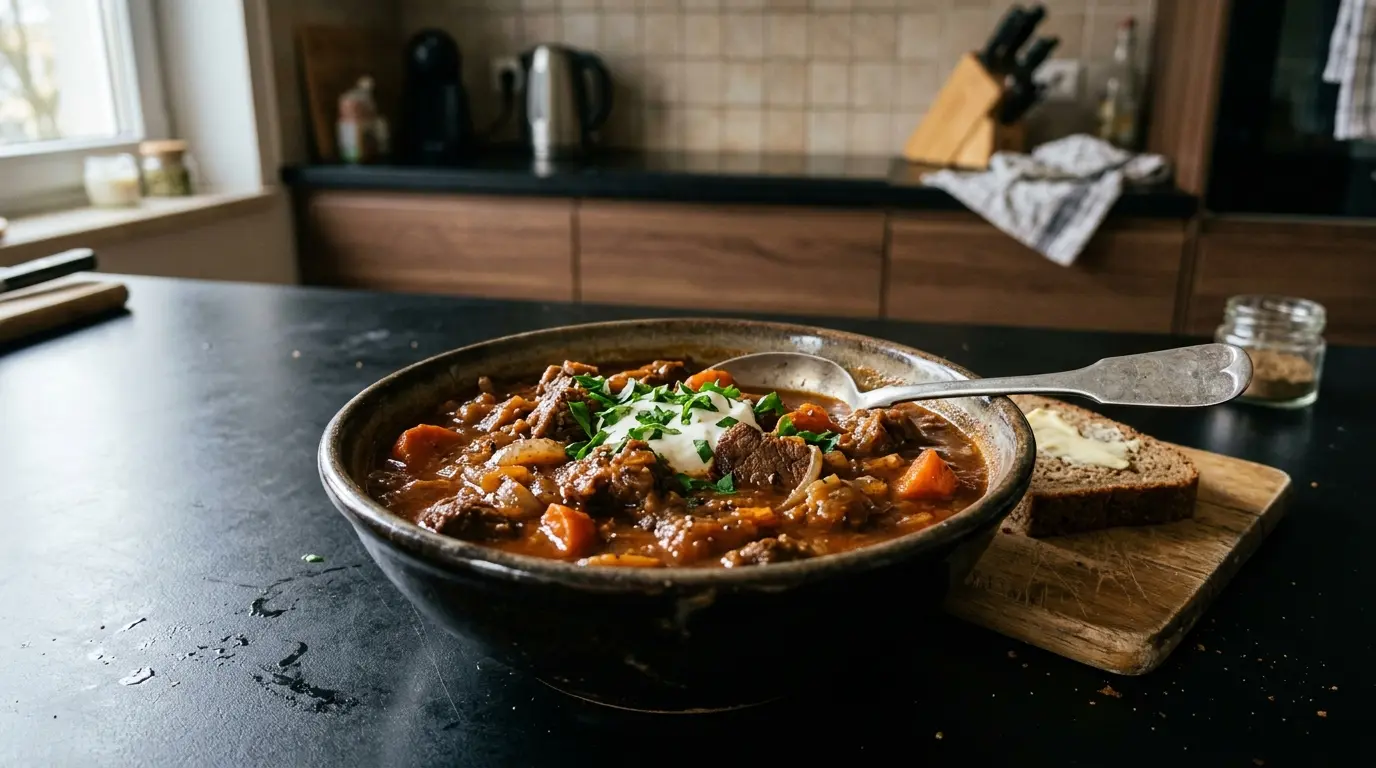
Rinderbraten is a classic German beef roast braised in the oven with vegetables and a dark sauce. In many homes it appears on Sundays or at festive dinners, when the whole family gathers at the table. The flavour is a bit like a cross between Polish roast and goulash, but the sauce is more concentrated and strongly vegetable-based.
This Rinderbraten is a quintessential German Sunday roast: slowly braised beef in a rich, vegetable-based dark gravy. The meat becomes very tender, and the sauce, thickened with blended vegetables, is naturally full of flavour without the need for artificial thickeners.
Chef's tips
Choose a well-marbled cut of beef – a bit of fat keeps the roast juicy during the long braise. Don’t skip the initial browning of the meat and vegetables; this step builds the deep flavour of the final sauce. If you have time, marinate the meat overnight in wine, stock and spices for an even more aromatic result.
How to serve
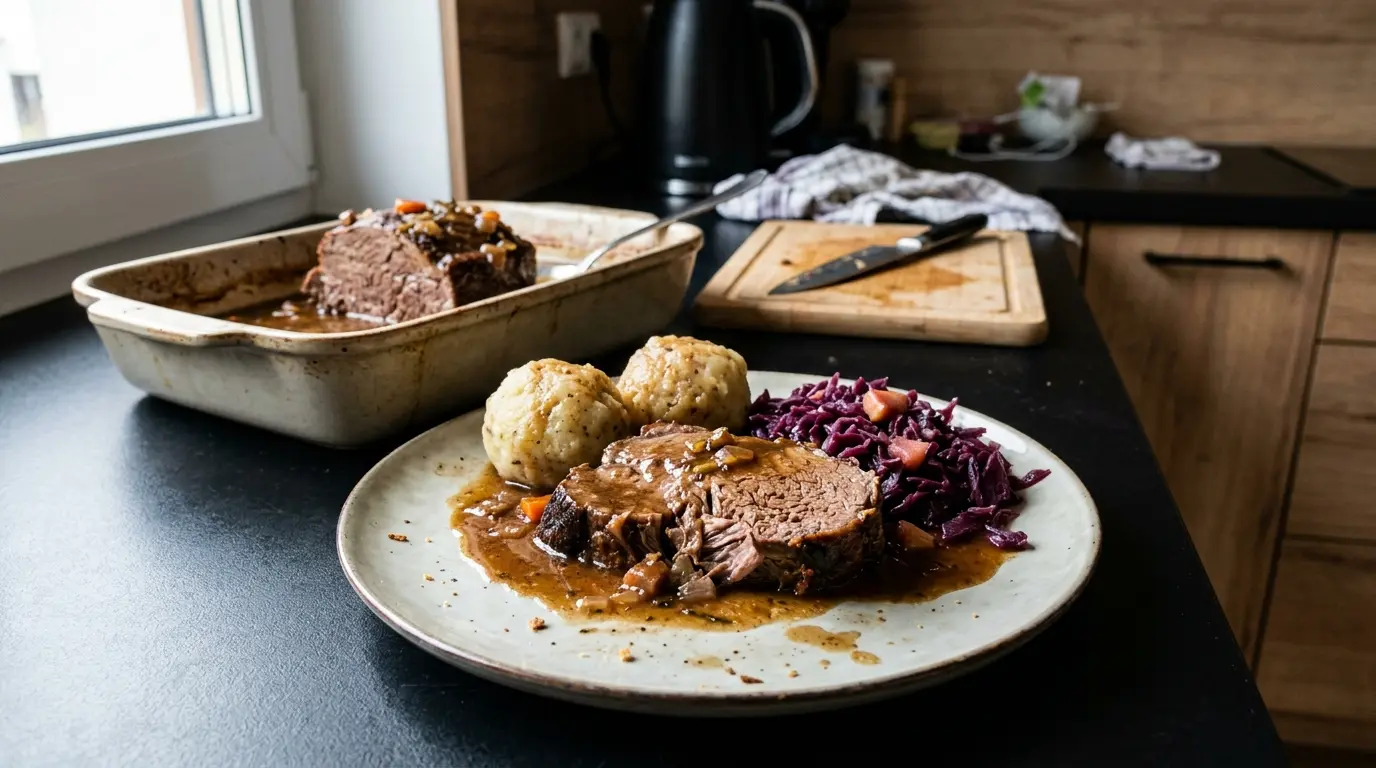
Serve the roast sliced, generously covered with hot gravy, alongside potato dumplings, spaetzle or mashed potatoes. Add braised red cabbage, sauerkraut or a simple cucumber salad to complete the plate.
Ingredients
- beef for roasting - 1.5 kg
- carrot - 2 piece
- celeriac - 0.25 piece
- onion - 2 piece
- garlic - 3 clove
- oil - 3 tablespoon
- stock beef or vegetable - 500 ml
- red wine - 150 ml
- mustard - 1.5 tablespoon
- bay leaf - 2 piece
- thyme dried - 1 teaspoon
- wheat flour - 1.5 tablespoon
- salt
- black pepper
Preparation
- Take the beef out of the fridge 30 minutes before roasting, pat it dry with paper towels and rub all over with salt, pepper and mustard.
- Peel the carrot, celeriac and onions and cut them into large pieces; lightly crush the garlic cloves with a knife.
- Heat a large heavy pan or ovenproof pot with a thick base with the oil over high heat. Sear the meat for 2–3 minutes on each side until the surface is well browned and a brown crust forms.
- Remove the meat to a plate. In the same fat, fry the carrot, celeriac, onion and garlic for 5–7 minutes over medium heat, stirring often, until the vegetables are lightly browned.
- Pour in the wine, bring to the boil and cook for 2–3 minutes, scraping up the browned bits stuck to the bottom with a wooden spoon.
- Add the stock, bay leaves and thyme, then return the meat to the pot. The liquid should reach roughly halfway up the meat; if necessary, add a little water.
- Cover the pot with a lid and place in an oven preheated to 160°C (top and bottom heat). Roast for 2–2.5 hours, until the meat is very tender – a fork should slide in easily when pierced.
- Every 40 minutes, baste the meat with the sauce from the pot. If the sauce reduces too much, add a little water or stock.
- Transfer the cooked meat to a board and cover loosely with aluminium foil for 10–15 minutes to rest.
- Remove the bay leaves. Blend the vegetables and sauce with a hand blender until smooth or press through a sieve. If the sauce is too thin, mix the flour with 3 tablespoons of cold water, pour into the sauce, bring to the boil and cook for 3–4 minutes, stirring, until it thickens.
- Slice the meat across the grain and serve drizzled with the hot pan gravy.
Storage
Store leftover meat in the sauce in an airtight container in the fridge for up to 3 days. Reheat gently on the stove, adding a splash of water or stock if needed. The meat also freezes well; slice it before freezing for easier portioning.