Dolmades – Greek vine leaf rolls with rice and herbs Recipe
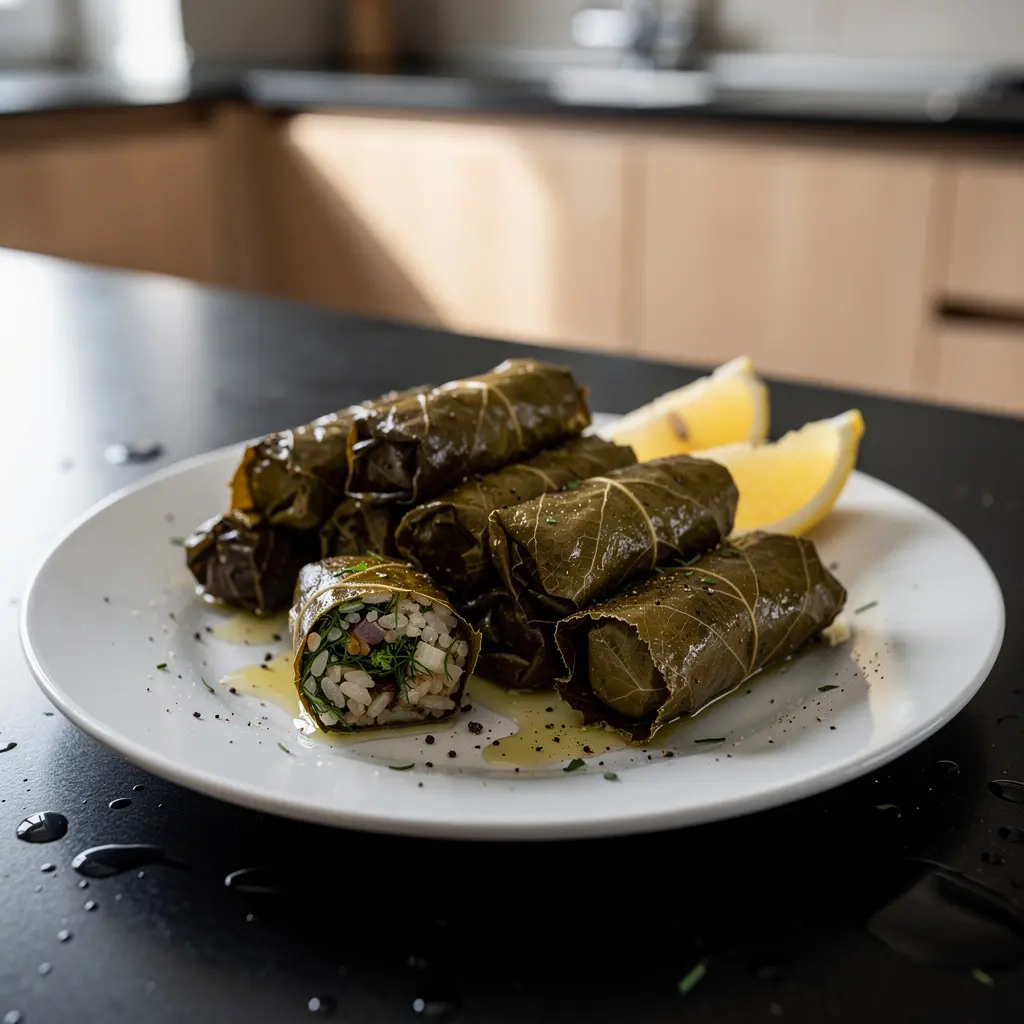
Dolmades are small rolls wrapped not in cabbage, but in vine leaves, filled with rice and herbs. In Greece they are often served cold as an appetizer, alongside olives, cheese and bread. They are delicately lemony, herbaceous and perfect as a snack to nibble on during long conversations at the table.
These homemade dolmades bring a taste of a Greek taverna to your table: delicate vine leaves, fragrant herbs and a refreshing lemon note. They are perfect to make ahead, ideal for sharing and look impressive despite using simple, everyday ingredients.
Chef's tips
Do not overfill the leaves – the rice will expand as it cooks and can tear the rolls. If your vine leaves are very salty, soak them briefly in cold water after rinsing. Try to roll the dolmades to a similar size so they cook evenly. If you like a stronger lemon flavor, add a little more lemon juice to the cooking liquid and drizzle some over just before serving.
How to serve
Serve the dolmades on a large platter, drizzled with olive oil and lemon juice, sprinkled with extra chopped herbs. Add lemon wedges on the side so everyone can adjust the acidity. They pair wonderfully with tzatziki, Greek salad, olives, feta and warm pita or crusty bread.
Ingredients
- vine leaves marinated from a jar or fresh, blanched - 40 pieces
- rice short-grain or risotto rice - 250 g
- onion medium - 2 pieces
- olive oil for frying and cooking - 6 tablespoons
- fresh dill finely chopped - 3 tablespoons
- parsley finely chopped - 3 tablespoons
- fresh mint finely chopped, optional - 1 tablespoon
- lemon juice freshly squeezed - 3 tablespoons
- water for cooking the dolmades - 500 ml
- salt to taste
- black pepper to taste
Preparation
- If you are using vine leaves from a jar, rinse them thoroughly under running water to remove excess salt and brine. If you have fresh leaves, blanch them in boiling water for 1–2 minutes until they soften, then transfer to cold water.
- Rinse the rice in a sieve under cold water until the water runs almost clear to remove excess starch.
- Peel the onions and dice them finely. Heat 3 tablespoons of olive oil in a large pan and sauté the onion over medium heat for 5–7 minutes, until soft and slightly translucent but not browned.
- Add the rice to the pan, mix with the onion and fry for 2–3 minutes, until each grain is coated in oil and slightly translucent.
- Add 200 ml of water, a pinch of salt and pepper, stir and cook over low heat for 5–7 minutes, until the rice absorbs most of the liquid but is still firm in the center. Remove from the heat.
- Add the chopped dill, parsley, mint (if using) and 2 tablespoons of lemon juice to the slightly cooled rice. Mix and taste – the filling should be distinctly herby and lightly lemony.
- Line the bottom of a wide pot with a few damaged vine leaves or any leftover ones so the dolmades don’t burn.
- Place each vine leaf on a board, shiny side down, stem towards you. Put about 1 teaspoon of filling in the center, closer to the stem (not too much, the rice will still swell).
- Fold the bottom part of the leaf over the filling, then fold the sides inwards and roll towards the tip of the leaf to form a small, tight roll. Do not squeeze too hard so the leaf doesn’t tear.
- Arrange the dolmades tightly next to each other in the pot, in layers, seam side down so they don’t unravel.
- When all are in the pot, drizzle with 3 tablespoons of olive oil and 1 tablespoon of lemon juice. Pour in water so they are almost covered.
- Place an inverted plate on top to gently weigh them down and prevent them from floating while cooking.
- Bring the water to a boil, reduce the heat to low and cook, covered, for about 35–40 minutes, until the leaves are tender and the rice inside is cooked.
- Remove the pot from the heat and leave the dolmades in the liquid until completely cooled – they will be juicier and easier to take out in one piece.
- Serve cold or at room temperature, drizzled with extra lemon juice and a little olive oil.
Storage
Dolmades najlepiej smakują po 1–2 dniach w lodówce, gdy smaki się przegryzą. Przechowuj je w zalewie z gotowania lub skropione oliwą i sokiem z cytryny, szczelnie przykryte.