Dakgangjeong – Crispy Chicken in Sweet and Spicy Sauce Recipe
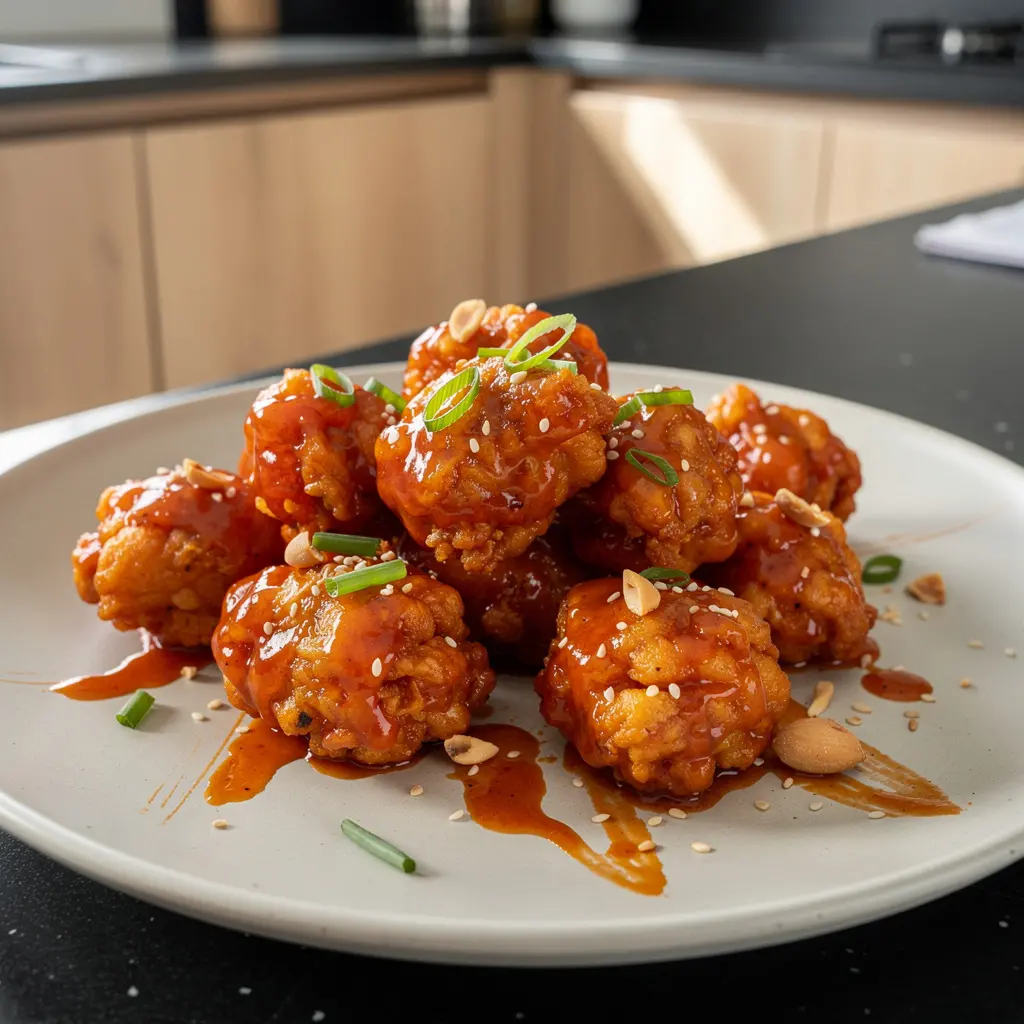
Dakgangjeong is bite-sized pieces of chicken in a light coating, fried until crispy and tossed in a thick, sweet and spicy sauce. In Korea it’s often eaten while watching a game or as a snack with beer, a bit like sports bar wings. The sauce is sticky, aromatic, and so addictive that it’s hard to stop at just one piece.
Dakgangjeong combines ultra-crispy double-fried chicken with a glossy, sticky sauce that balances sweetness, heat, and umami. It’s a classic Korean street food that feels both comforting and exciting, and it works equally well as a snack with drinks or as a main dish with rice.
Chef's tips
For the crispiest texture, make sure the chicken is well coated but not overloaded with starch – shake off any excess. Fry in small batches so the oil temperature doesn’t drop too much. Double-frying is key: the first fry cooks the meat through, and the second locks in the crunch. Taste the sauce before adding the chicken and adjust the sweetness or heat to your liking by tweaking the honey, ketchup, or gochujang.
How to serve
Serve dakgangjeong piled high on a large platter, sprinkled generously with toasted sesame seeds and chopped chives or spring onions. Pair it with steamed white rice, kimchi, and a simple cabbage salad dressed with rice vinegar and a touch of sesame oil. As a snack, offer it in small bowls with toothpicks or chopsticks alongside cold beer or sparkling drinks.
Ingredients
- chicken - 700 g
- potato starch - 120 g
- salt - 0.5 teaspoon
- black pepper - 0.5 teaspoon
- vegetable oil - 800 ml
- garlic - 3 cloves
- ginger - 2 cm
- gochujang paste - 1.5 tablespoon
- soy sauce - 3 tablespoon
- honey - 3 tablespoon
- ketchup - 2 tablespoon
- rice vinegar - 1.5 tablespoon
- sesame seeds - 1 tablespoon
- peanuts - 40 g
- chives - 2 tablespoon
Preparation
- Trim excess fat and membranes from the chicken and cut it into bite-sized pieces, about 3 cm.
- Season the chicken pieces with salt and pepper, mix well, and set aside for 10 minutes at room temperature.
- Put the potato starch into a bowl. Coat each piece of chicken in the starch so it’s evenly covered in a thin layer, then shake off the excess.
- Heat the oil to about 170–180°C in a deep pot or high-sided pan; if you don’t have a thermometer, drop in a small piece of starch – it should immediately start to sizzle vigorously.
- Fry the chicken in batches for 5–6 minutes, until the pieces are light golden and crispy. Remove with a slotted spoon onto a plate lined with paper towels.
- After frying all the chicken, increase the heat, reheat the oil, and fry the chicken a second time for 2–3 minutes, until the coating is very crispy and a deeper golden color.
- Finely chop the garlic and ginger.
- In a wide pan, combine the soy sauce, honey, ketchup, gochujang paste, and rice vinegar. Add the garlic and ginger.
- Place the pan over medium heat and cook the sauce for 3–4 minutes, stirring, until it starts to bubble gently and thickens to a sticky syrup consistency.
- Add the fried chicken pieces to the sauce and toss quickly for 1–2 minutes, until every piece is evenly coated in a glossy layer of sauce.
- Add the toasted peanuts and gently mix.
- Transfer the chicken to a serving platter, sprinkle with toasted sesame seeds and chopped chives. Serve immediately while it’s still very crispy.
Storage
Kurczak w sosie po schłodzeniu traci chrupkość, ale nadal jest smaczny na zimno lub lekko podgrzany w piekarniku. Przechowuj go w lodówce w szczelnym pojemniku i podgrzewaj w 180°C przez 8–10 minut, aby lekko odświeżyć strukturę.