Naengmyeon – Cold Buckwheat Noodles in Broth Recipe
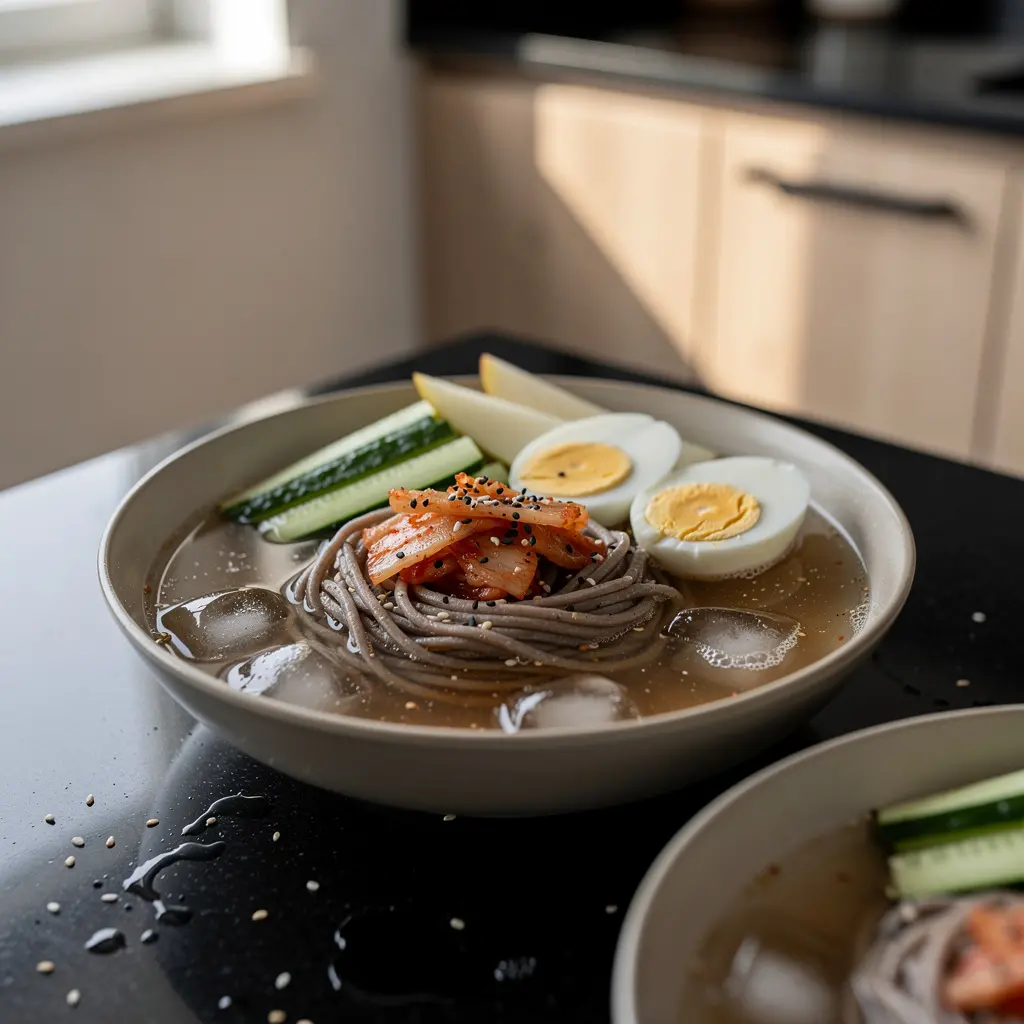
Naengmyeon is a Korean cold noodle dish most often eaten in summer, when the heat makes hot soup unappealing. Long, springy strands of noodles float in an ice-cold, slightly tangy broth with cucumber, pear, and egg. It’s a bit like a cross between a cold soup and a pasta salad, but in a Korean version.
Naengmyeon combines the comfort of a noodle dish with the refreshing lightness of a cold soup. The contrast between icy, tangy broth, chewy buckwheat noodles, and crunchy fruit and vegetables makes it uniquely satisfying on hot days, while the option to add kimchi and mustard lets everyone adjust the flavor to their own taste.
Chef's tips
Use the coldest broth you can – ideally chill it in the fridge in advance and add ice just before serving. Don’t skip rinsing and kneading the noodles under cold water; this step is key for getting the characteristic chewy texture and a clear, clean-tasting broth. Taste the broth before chilling and adjust the balance of vinegar, sugar, and soy sauce so it’s slightly more intense than you’d like – the flavor will mellow once it’s ice-cold and diluted with ice cubes.
How to serve
Serve naengmyeon in deep, wide bowls so the noodles have room and the toppings are visible. Put extra kimchi, mustard, and perhaps a little rice vinegar on the table so everyone can season their bowl individually. It pairs well with simple Korean side dishes such as kimchi, pickled radish, or lightly seasoned blanched spinach.
Ingredients
- buckwheat noodles Korean naengmyeon noodles or Japanese soba as a substitute - 400 g
- beef broth well chilled, preferably homemade - 1 l
- rice vinegar - 4 tablespoons
- sugar - 2 teaspoons
- soy sauce light - 3 tablespoons
- cucumber fresh, long - 1 piece
- pear preferably crisp, e.g. Conference or Korean pear if available - 1 piece
- egg hard-boiled - 2 pieces
- kimchi optional, for a spicier version - 100 g
- mustard hot, Dijon works well - 1 teaspoon
- sesame oil - 1 tablespoon
- sesame seeds toasted in a dry pan - 1 tablespoon
- ice cubes or more, to chill the broth - 10 pieces
- salt to taste
- pepper freshly ground, to taste
Preparation
- Pour the beef broth into a bowl or pot, add the rice vinegar, sugar, soy sauce, and sesame oil, mix thoroughly, and taste – the flavor should be slightly sour, salty, and gently sweet. Place in the fridge for at least 20 minutes so it becomes very cold.
- Wash the cucumber, cut it in half lengthwise, scoop out the soft seedy center with a teaspoon, and cut the rest into thin matchsticks. Peel the pear, remove the core, and also slice it into thin slices or matchsticks. Set both in the fridge so they are well chilled.
- Hard-boil the eggs (about 9–10 minutes from the moment the water starts boiling), then cool them in cold water, peel, and cut each one in half.
- Cook the noodles according to the instructions on the package in plenty of boiling, lightly salted water – usually 4–6 minutes, until they are tender but springy. Immediately drain after cooking and rinse under very cold running water, then knead the noodles with your hands under the stream of water for about 30 seconds to make them more elastic and remove excess starch.
- Divide the drained noodles between 4 deep bowls, forming them into “nests” – you can use a fork and spoon to help.
- Add a few ice cubes to the very cold broth and stir. If you want a spicier version, finely chop the kimchi and add it to the broth or directly on top of the noodles.
- Pour the cold broth over the noodles so that the strands are almost completely submerged. Top with cucumber, pear, half an egg, and sprinkle with sesame seeds and a little pepper.
- Serve a small bowl of hot mustard on the table – everyone can add a little to their bowl and mix before eating to adjust the heat to their liking.
Storage
Makaron w bulionie najlepiej zjeść od razu, bo z czasem mięknie i traci sprężystość. Jeśli chcesz przechować, trzymaj osobno makaron (max 1 dzień) i bulion (2–3 dni), łącz tuż przed podaniem.