Korean Soup with Gochujang and Vegetables Recipe
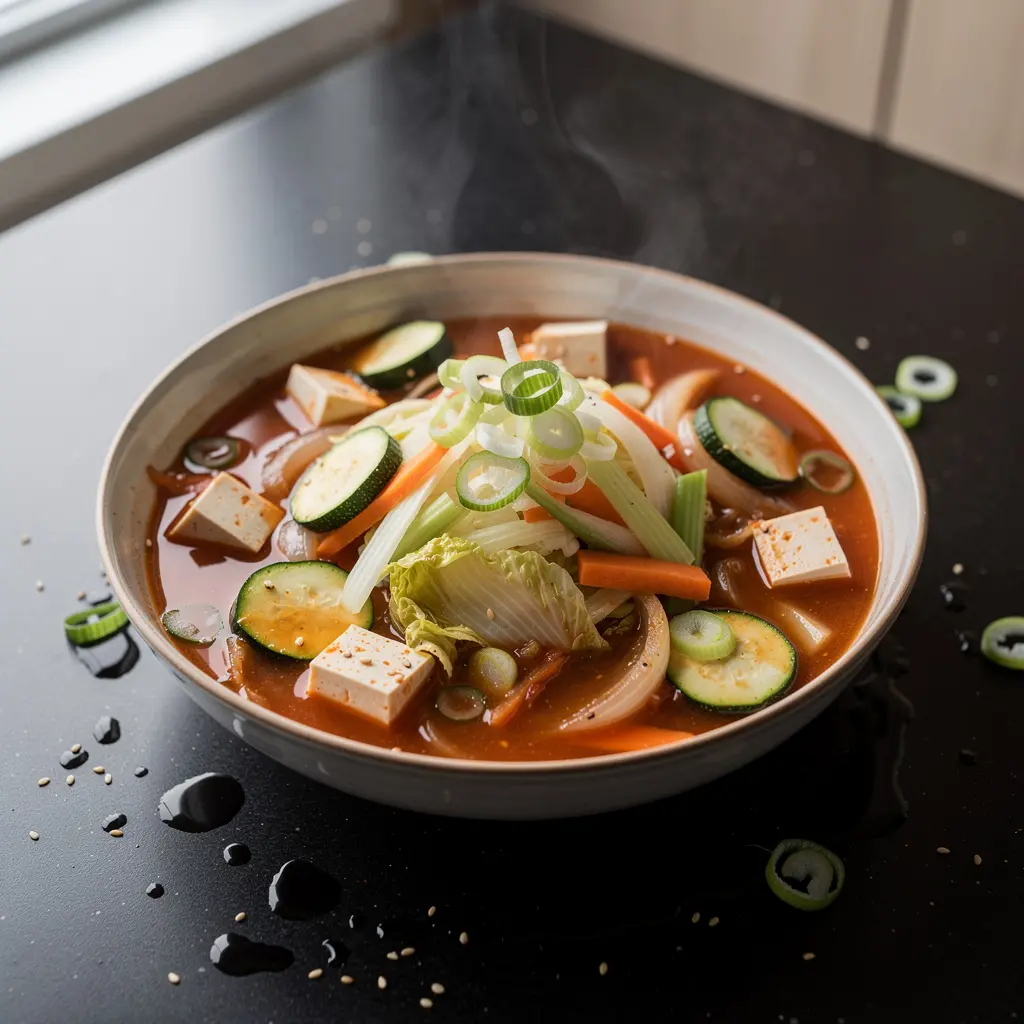
A spicy yet simple vegetable soup with gochujang paste that gives it a deep, slightly smoky flavor. It’s a bit like a spicier tomato soup loaded with vegetables and tofu. Perfect for colder days and easy to adapt to whatever you have in the fridge.
This soup combines the comforting feel of a classic vegetable soup with the deep, spicy and slightly smoky flavor of Korean gochujang. It’s quick to make, flexible in terms of vegetables, and satisfying without being heavy.
Chef's tips
Adjust the level of spiciness gradually: start with a smaller amount of gochujang, taste, and add more if needed. Use a good-quality broth (vegetable or chicken) for the best flavor. If your gochujang is very salty, reduce the soy sauce and season at the end.
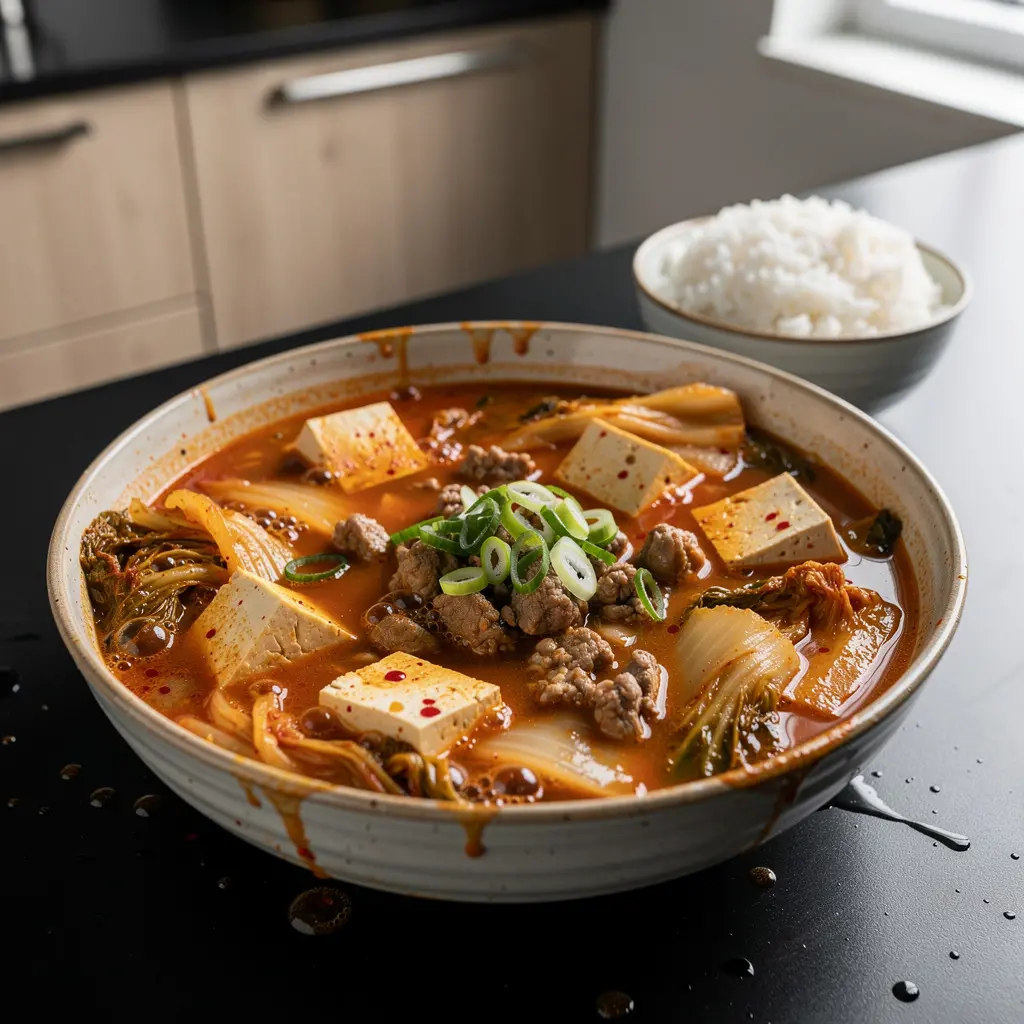
How to serve
Serve in deep bowls, topped with extra sliced spring onion and a drizzle of sesame oil. You can add cooked rice or rice noodles directly to the bowl to turn it into a more filling one-bowl meal. A side of kimchi pairs very well with this soup.
Ingredients
- tofu - 250 g
- zucchini - 1 piece
- carrot - 1 piece
- onion - 1 piece
- napa cabbage - 200 g
- garlic - 3 cloves
- gochujang - 25 g
- soy sauce - 25 ml
- broth - 1.2 l
- oil - 15 ml
- sesame oil - 5 ml
- spring onion - 2 pieces
Preparation
- Pat the tofu dry with a paper towel and cut into cubes about 1.5 cm. Slice the zucchini into half-moons, and the carrot into thin half-moons or matchsticks. Slice the napa cabbage into strips about 2 cm wide.
- Slice the yellow onion into thin wedges and finely chop the garlic. Slice the spring onion, keeping the white and green parts separate.
- Heat the vegetable oil in a pot over medium heat. Add the onion and the white part of the spring onion and sauté for 3–4 minutes, stirring, until they soften and become slightly translucent.
- Add the garlic and carrot and sauté for another 2 minutes, stirring so the garlic doesn’t burn.
- Add the gochujang paste and cook for 1–2 minutes, stirring constantly, until the paste loosens slightly and becomes more fragrant.
- Pour in the broth, add the soy sauce, and mix well so the paste fully dissolves in the liquid. Bring to a boil.
- Add the zucchini, napa cabbage, and tofu. Reduce the heat and simmer gently for 10–12 minutes, until the vegetables are tender but not falling apart.
- Taste the soup and, if needed, season with more soy sauce or a little extra gochujang if you want it spicier.
- Finally, add the sesame oil and the green part of the spring onion, stir, and cook for 1 more minute. Serve the soup hot right after cooking.
Storage
Zupa dobrze się przechowuje w lodówce, a smaki jeszcze się zaostrzają. Podgrzewaj na małym ogniu, mieszając od czasu do czasu. Jeśli zamrozisz, tofu po rozmrożeniu będzie bardziej gąbczaste, ale nadal smaczne.